Virginia, Burley and English Blends: A Beginner's Guide to Pipe Tobacco

There is no single best pipe tobacco, only blends that suit the way you smoke and the flavours you enjoy. The reassuring part is that almost everything on a tobacconist's shelf is built from a handful of leaf families, and once you know what each one does, choosing a tin stops being a lottery. What follows is a straightforward guide to those families, what they taste like, how strong they are, and where a new smoker might sensibly begin.
Before the blend names, learn the ingredients. Nearly every tin is a mixture of two or three of these, and the proportions tell you most of what you need to know.
An "English" blend is a style, not a leaf: Virginia and orientals with Latakia on top. That distinction trips up plenty of beginners, so it is worth saying plainly.
Virginia, also called brightleaf, is flue-cured: the leaf is heated in a closed barn so its natural sugars stay in place. That sugar is why Virginias taste sweet — fresh hay, warm bread, citrus peel, sometimes stewed fruit as the tin ages — and also why they can burn hot and bite if you puff hard.
A pure Virginia flake or plug, pressed and sliced into thin sheets, is a category in its own right. Rubbed out and dried for fifteen minutes or so, it can be one of the great pleasures of the hobby. Add a little Perique and you have a "VaPer": the same sweetness with plum, pepper and a longer finish. Add nothing and you have a blend that rewards patience more than any other family.
New smokers usually blame the pipe or their packing. More often it is a Virginia smoked too quickly. Slow down, sip rather than draw, and leave the tobacco a little drier than it comes from the tin. Bite is nearly always a technique problem wearing a leaf's clothing.
Burley is air-cured rather than heated, which leaves it low in sugar and high in body. Expect cocoa, nuts, oats, a slightly earthy backbone. It burns coolly and steadily, and it takes flavourings exceptionally well, which is why so many traditional over-the-counter blends are built on it.
For a beginner, burley is the forgiving choice. It is hard to make it bite, it tolerates loose packing, and it stays lit without ceremony. Its quiet flavour can seem dull next to a Virginia, though, and it often carries more nicotine than its gentle taste suggests — a blend that smells like nothing in particular can still leave you feeling it. Dark fired Kentucky is burley cured over smouldering wood, which turns it smoky and considerably stronger.
An English blend is Virginia and oriental leaf with Latakia added. Latakia is itself smoked over fires during curing, so it brings a pungent, tarry, almost church-incense aroma. In small quantities it adds depth and a cool, dry finish; in larger ones it dominates the room before you have lit the pipe.
Push the orientals forward and reduce the Latakia, and you have a "Balkan" — drier, spicier, more complex. Flavour intensity and nicotine strength get confused here, and it is worth separating them: a heavy Latakia blend can taste enormous and still be mild in nicotine, while a plain burley can be the opposite. If you are sensitive to strength, ask about the leaf, not the smell.
Latakia also lingers in a pipe. Most smokers keep one pipe for English blends and one for everything else, because the ghost will happily sit in the briar and colour the next three bowls.
Aromatics are topped with vanilla, rum, cherry, honey and the like. The tin note is wonderful, and beginners often buy on that alone — then wonder why the smoke tastes so much softer than it smells. Toppings flavour the aroma more than the tongue, and heavily cased tobacco tends to be moist, which means it can steam and bite.
British smokers will also meet the Lakeland style: old-fashioned blends carrying floral essences that some describe as rose or geranium. They are peculiar, traditional and genuinely divisive. Try a small quantity before committing to a tin. With any aromatic, dry it longer than feels right, pack it loosely, and use a cob or a cheap pipe until you know whether you like it.
If you want to learn your own taste rather than guess at it, work through categories one at a time and keep notes. A simple path:
One bowl each is enough to form a first impression. Two or three more will tell you whether it is worth a place in your rotation.
Buy small. Where a tobacconist will sell you ten or twenty-five grams, take it; tins are lovely but expensive mistakes. Keep a notebook with the blend, the date and one honest line about it, because memory is unreliable after a dozen samples.
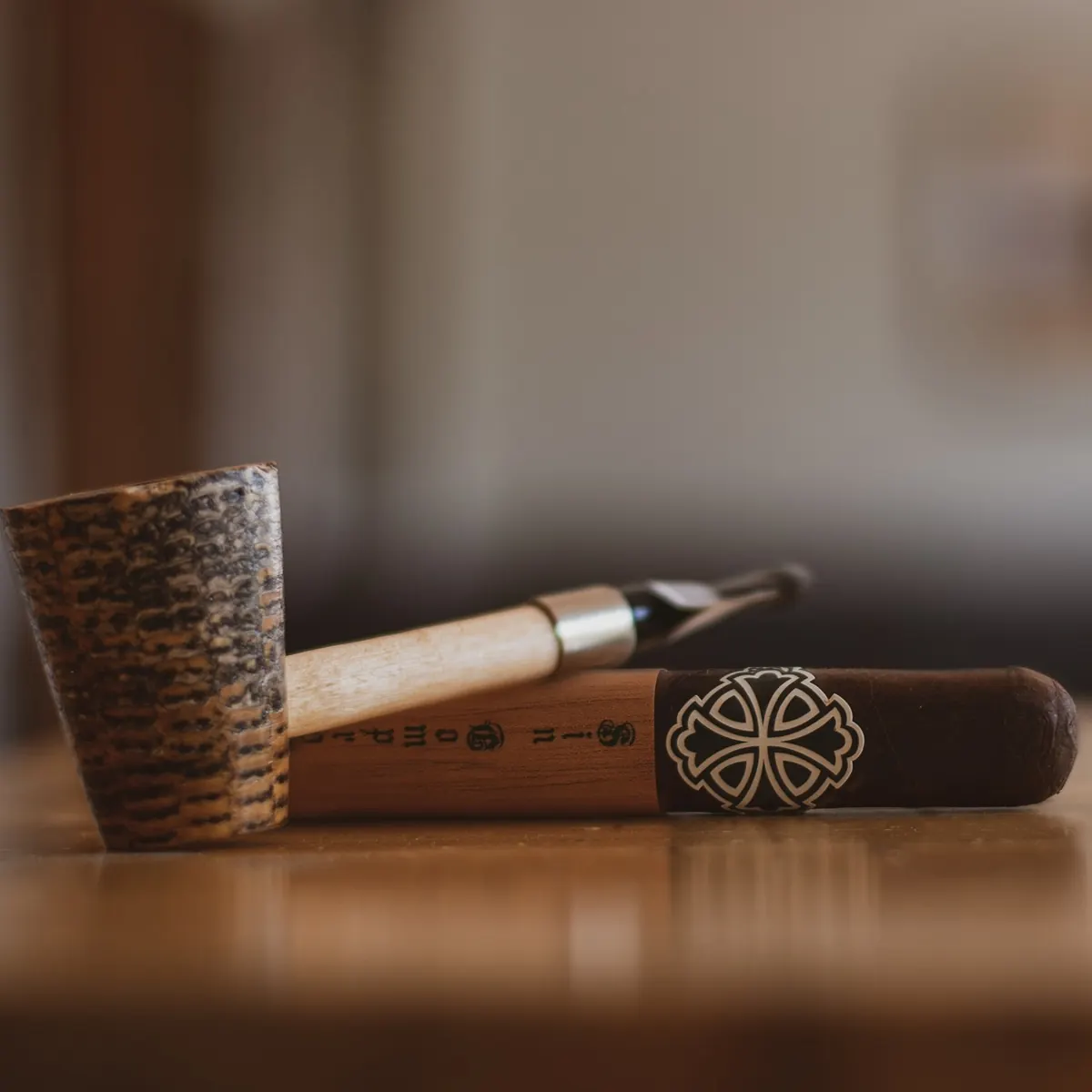
Dedicate a pipe early, at least one for Latakia and one for aromatics, and use a Missouri Meerschaum cob for anything you are unsure about — it costs little and it smokes well. Jar opened tobacco properly rather than leaving it in a dried-out tin, and clean the pipe after every smoke with a pipe cleaner or two. Finally, resist chasing flavour through technique: if a blend tastes ashy or hot, the answer is nearly always to slow down and dry it further.
Pipe smoking carries serious health risks, and no form of tobacco is a safe alternative to another. If you are concerned about your health, or want help stopping, speak to your GP or pharmacist.
Photo: Briam-Cute / Pixabay
Previous Post
Straight vs Bent Briar Pipes: A Shape Comparison for New Smokers
Next Post
The Essential Pipe Accessory Kit: A Checklist for Beginners