Straight vs Bent Briar Pipes: A Shape Comparison for New Smokers
The shape of a pipe looks like a matter of taste until you actually smoke one. Then it becomes a matter of physics. A straight pipe and a bent pipe of the same weight behave completely differently in your mouth, and that difference shows up fastest in the two situations new smokers care about most: reading with a book propped on your knee, and keeping both hands on the wheel.
There is no absolute right answer here, and anyone who tells you otherwise is selling something. But knowing what each shape does well will save you from buying a pipe you admire on the shelf and quietly resent by the third bowl.
A pipe hangs from your teeth like a lever on a fulcrum. On a straight pipe, the bowl sits well forward of the button, so most of the mass is out in front of your jaw. Your teeth must grip to stop the bowl tipping down and forward. On a bent pipe, the bowl sits lower and closer to your face, with the centre of gravity often directly beneath the button or just behind it. The pipe hangs; it doesn't balance.
That single fact explains most of the practical differences between the two shapes. It is also why weight matters more than shape. A heavy bent pipe can be far more tiring than a light straight one. Anything under roughly 30g feels almost weightless in the teeth. Past 50g, expect to hold it rather than clench it, whatever the bend.
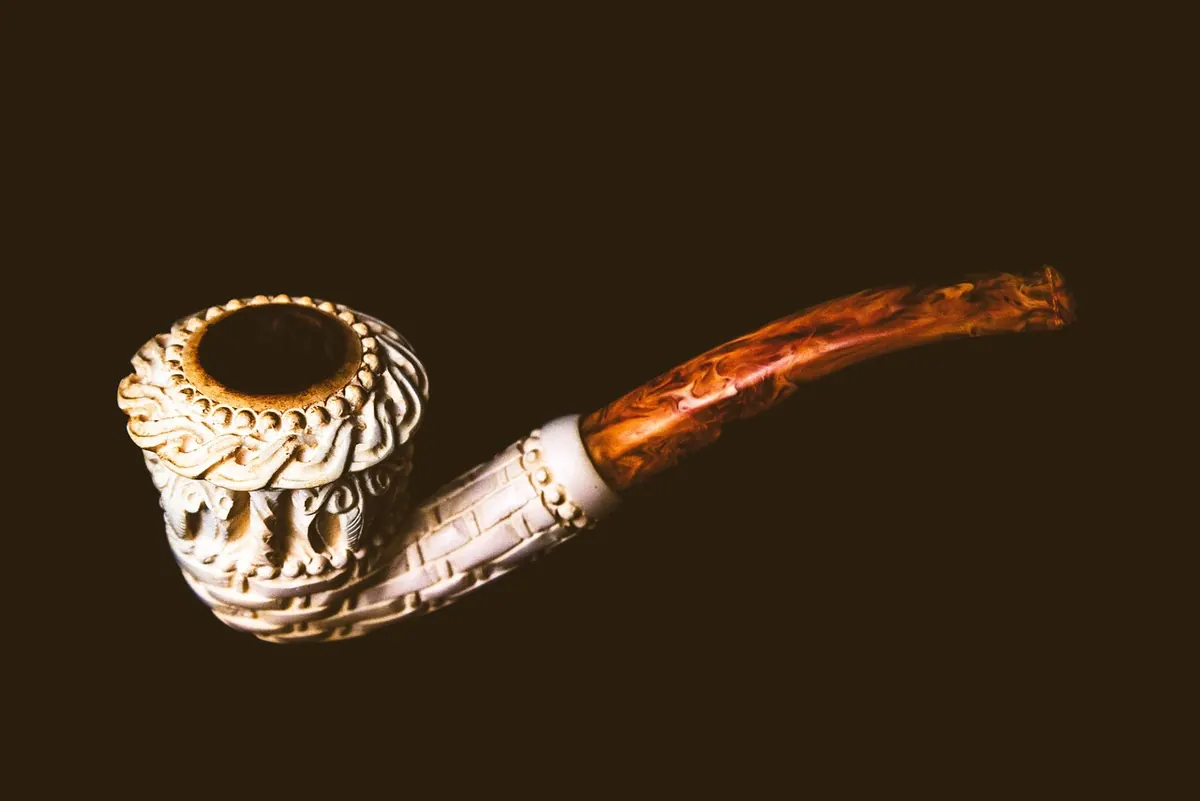
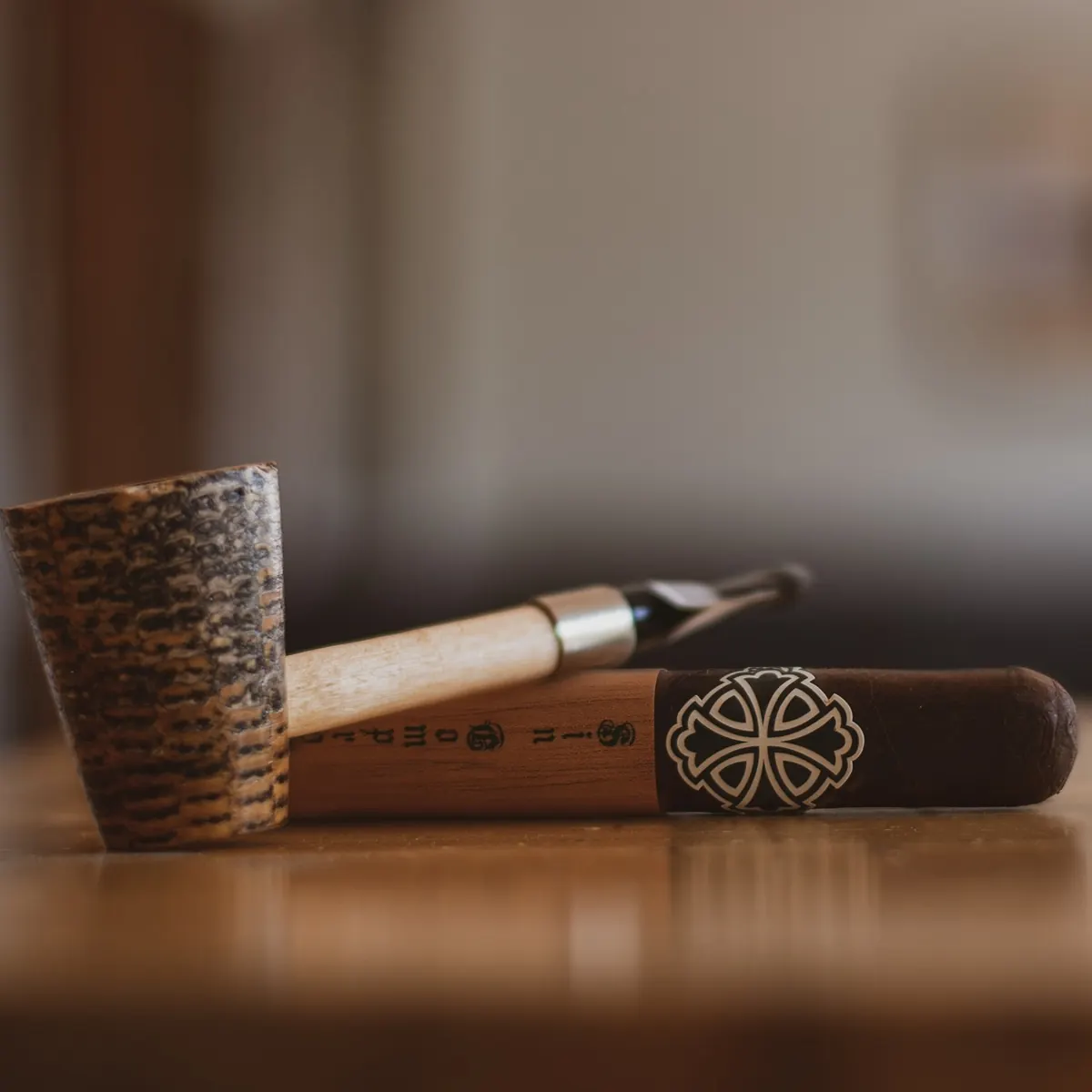
A quarter bend drops the bowl a couple of centimetres. That is enough to shift the balance without throwing smoke towards your nose. A full bend, or a Hungarian-style Oom Paul, tucks the bowl right under the chin and clenches beautifully. It is also the shape most likely to send smoke curling up past your face and into your eyes, which is why some experienced smokers avoid full bents at the desk entirely.
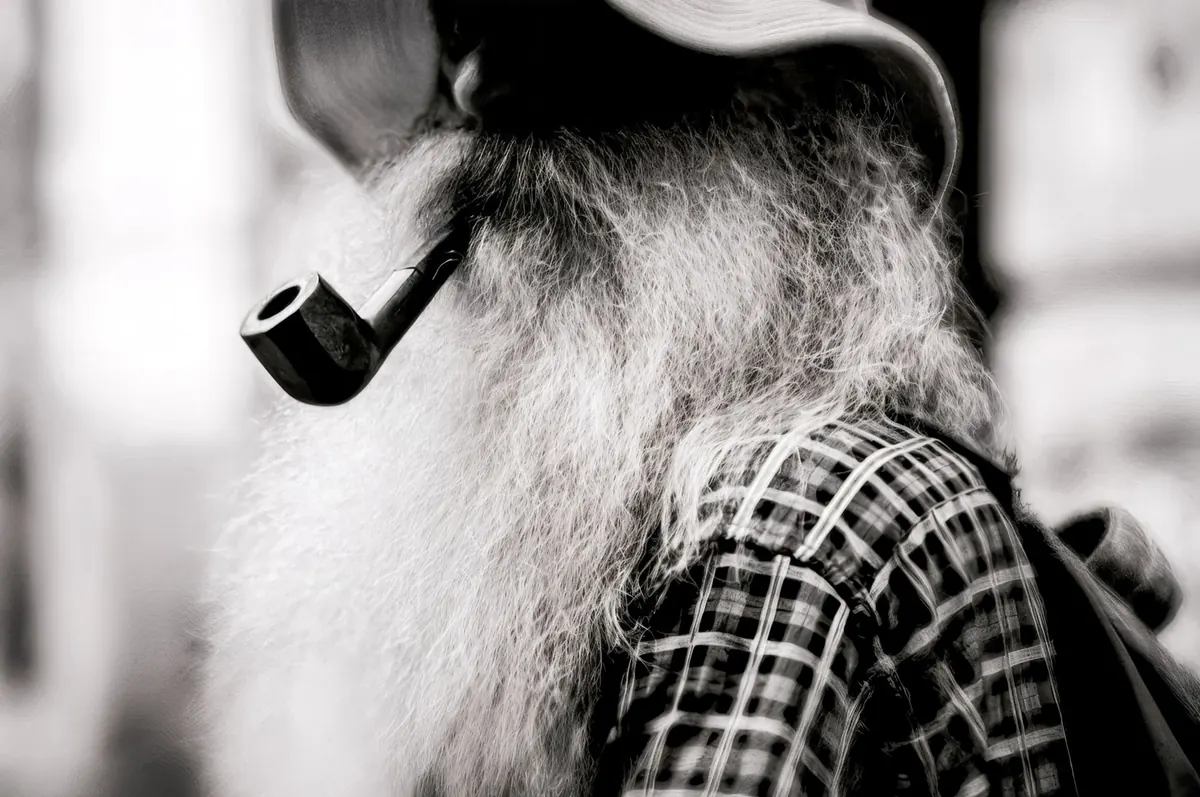
If you want a pipe to sit in your mouth while your hands do something else, the bent shape wins, and it isn't close. The leverage works in your favour, so a light bite holds the pipe rather than a clamp. Straight pipes ask more of your jaw, particularly once the bowl is warm and the tobacco has burned down to a lighter, less stable load.
Shape is only part of the story, though. Four things matter more than the bend itself:
If clenching is new to you, stop long before your jaw aches. Ten minutes, then put the pipe down and rest. Most beginners overdo it in week one and decide clenching is impossible when they have simply out-run their jaw muscles.
At a desk, straight pipes have a quiet advantage. The stem angles the smoke away from your face, the bowl sits where you can reach it for a tamp or a relight without thinking, and resting it in an ashtray is straightforward. The trade-off is length. A straight pipe juts out in front of you, and if you clench it while looking down at a book, the bowl will bump the page and hunt for your line of sight.
Bent pipes keep the bowl low and out of the way, which suits long reading sessions. The catch is the smoke: a deep bend can push the draught towards your nose and eyes, and the pipe sits close enough that you notice every gurgle. Many smokers settle on a quarter bend for study because it hangs low without aiming smoke at their own face.
A bent pipe is the better travelling companion, for one reason: it can be held entirely by your teeth while both hands stay on the wheel. A straight pipe needs a hand for anything beyond the shortest stretch, and it takes up space in front of you. In a small cabin, a long straight stem can catch on the wheel or loom into your view of the instruments.
Two practical rules. Load and light the pipe before you set off, or better, light it after you park — relighting, tamping and steering are a poor combination, and dropping a lit pipe in your lap ruins the journey. Second, smoking in a vehicle with anyone under 18 in it is against the law in the UK, so check the current rules before you light up at the wheel.
Straight pipes drain well. Moisture runs down the stem and back towards the bowl, and a pipe cleaner passes from button to bowl without a kink, so you can run one through mid-smoke and carry on. Bent pipes collect moisture in the bend, which is where gurgle comes from. A full bent is the worst offender and often will not take a standard cleaner at all; you need a thin or pre-bent one, and even then it may only reach the shank.
Wet aromatics make this worse in any shape. Dry your tobacco a little longer than feels sensible and most gurgle disappears before it starts.
For a new smoker who wants one pipe to do everything, a light quarter bend is the safest ground. It clenches without punishing your jaw, hangs low enough for a book, works at the wheel, and still drains well enough that a cleaner passes with a small bend of the wire. Keep the whole pipe under about 35g if you can, and look for a thin, wide button.
One last thing worth stating plainly: this is a comparison of shapes, not encouragement to take up smoking. If you are concerned about what tobacco smoke does to your health, speak to your GP rather than a pipe shop.
Photo: fikret kabay / Pexels
Previous Post
How to Break In a New Briar Pipe Without Burning the Bowl
Next Post
Virginia, Burley and English Blends: A Beginner's Guide to Pipe Tobacco